 ultimate-guide
Men's Outdoor Lifestyle Clothing: How to Dress for Every Adventure
Quick Summary
Men's outdoor lifestyle clothing is apparel built to handle trails, tailgates, duck blinds and weekend drives without looking out of place in town. The right pieces depend on conditions and activity, and a three-layer system of base, mid-layer and shell covers most situations.
- Build a three-layer system: a moisture-wicking base, a fleece or hoodie mid-layer, and a wind-resistant outer shell.
- Avoid cotton as a base layer because it holds sweat against your skin and pulls heat from your body when wet.
- Remove layers before you start sweating, since the system only works if you adjust it as conditions change.
- Test fit by squatting, lifting a knee and reaching overhead to confirm pants and shirts allow full movement.
- Choose a camo pattern that matches the vegetation and light where you hunt, not just what looks good.
Table of Contents
- What Men's Outdoor Lifestyle Clothing Covers
- Building a Men's Outdoor Layering System
- Choosing Men's Hiking Clothing by Weather and Activity
- Men's Hunting Clothing for Cold and Camo Conditions
- Men's Hiking Pants, Shorts and Fit Guidance
- Fabrics, Care and Garment Lifespan
- Start Building Your Outdoor Wardrobe at Better Grab A Beer
- Frequently Asked Questions
Men's Outdoor Lifestyle Clothing: How to Dress for Every Adventure
Last Updated: November 1, 2026
What Men's Outdoor Lifestyle Clothing Covers
Men's outdoor lifestyle clothing is the category of apparel built to handle trails, tailgates, duck blinds and weekend drives without looking out of place in town. It pulls from hiking, hunting, golf and everyday wear, which means the real question is not which brand is best but which pieces do the work you need. At Better Grab A Beer, we sell gear across several of those lanes, so this guide focuses on how the pieces fit together.
Outdoor clothing covers many categories: jackets and outerwear, shirts and tees, pants and shorts, mid-layers, sweatshirts and hoodies, and accessories like gloves. Each category solves a different problem. A jacket handles wind and precipitation, a base shirt manages sweat, and a hoodie provides warmth during a long wait on cold mornings.
The most common mistake is buying one item for every occasion. A heavy insulated coat is overkill for a warm afternoon hike, and a thin windbreaker will not save you at a frozen tailgate. Start by listing the conditions you actually face, then build from there.
Building a Men's Outdoor Layering System
A layering system is the foundation of smart outdoor dressing. Instead of relying on one thick garment, you stack thinner pieces that can be added or removed as conditions change. Three layers cover most situations: a base layer that moves moisture away from your skin, a mid-layer that holds heat, and an outer shell that blocks wind and rain.
The base layer matters more than most buyers expect. Cotton holds sweat against your skin, and once it is wet it pulls heat from your body. Moisture-wicking synthetic fabrics pull moisture outward so it evaporates, which helps keep you comfortable on a cold morning.
A practical approach works like this:
- Base layer: lightweight, moisture-wicking, fitted but not tight
- Mid-layer: fleece or a hoodie that traps warmth
- Outer layer: a wind-resistant shell for weather protection
You can adjust by removing the mid-layer on warmer days or adding a second one for cold, still conditions. The system is only as good as your willingness to adjust it, so take layers off before you start sweating.
Choosing Men's Hiking Clothing by Weather and Activity
Hiking clothing is not one-size-fits-all. A ridge walk in October calls for different choices than a humid summer trail. Match your clothing to the temperature range, expected precipitation and how hard you will be working. Harder effort generates more heat and sweat, so lighter layers usually work better for active trips.
Shirts, Tees and Moisture Management
Your shirt is the layer closest to your body, so fabric performance matters here more than anywhere else. Look for synthetic or blended fabrics that feature moisture management and quick-drying properties. The BGAB Captain's Shirt uses a 100% ripstop performance polyester with moisture and odor management, UPF 40+ protection and a wrinkle-resistant finish. For more on moisture-wicking hunting apparel, see our dedicated guide.
Our Darkwater LS Shirt is a long-sleeve cooling performance crew that offers UV sun protection rated UPF 44+ and snag and stain resistance. Short-sleeve options work well in summer, but long sleeves often protect better from sun and scratches.
Jackets and Wind Protection
A jacket should block wind first and handle light rain second. The BGAB Windy Day Jacket Camo is a water-resistant, lightweight windbreaker with a three-panel hood, elastic cuffs and welt pockets with mesh bags.
Water resistance and waterproofing are different. A water-resistant jacket sheds light drizzle, while a true waterproof shell handles sustained rain. Check the fabric description before buying if you expect wet weather for long stretches.
Men's Hunting Clothing for Cold and Camo Conditions
Hunting in cold weather demands warmth that stays put while you sit still for hours. Sitting motionless lets your body cool faster than walking, so insulation and wind protection become more important. A fleece-lined hoodie over a moisture-wicking base layer, topped with a wind-resistant camo jacket, gives you a flexible system for changing temperatures in the field. Our best hunting apparel for extreme cold guide covers this in more depth.
Camo pattern selection depends on your environment more than fashion. Choose a pattern that matches the vegetation and light where you hunt. Our guide to choosing hunting camo patterns explains how to match pattern to terrain. Dense woods call for different tones than open fields or snowy ground.
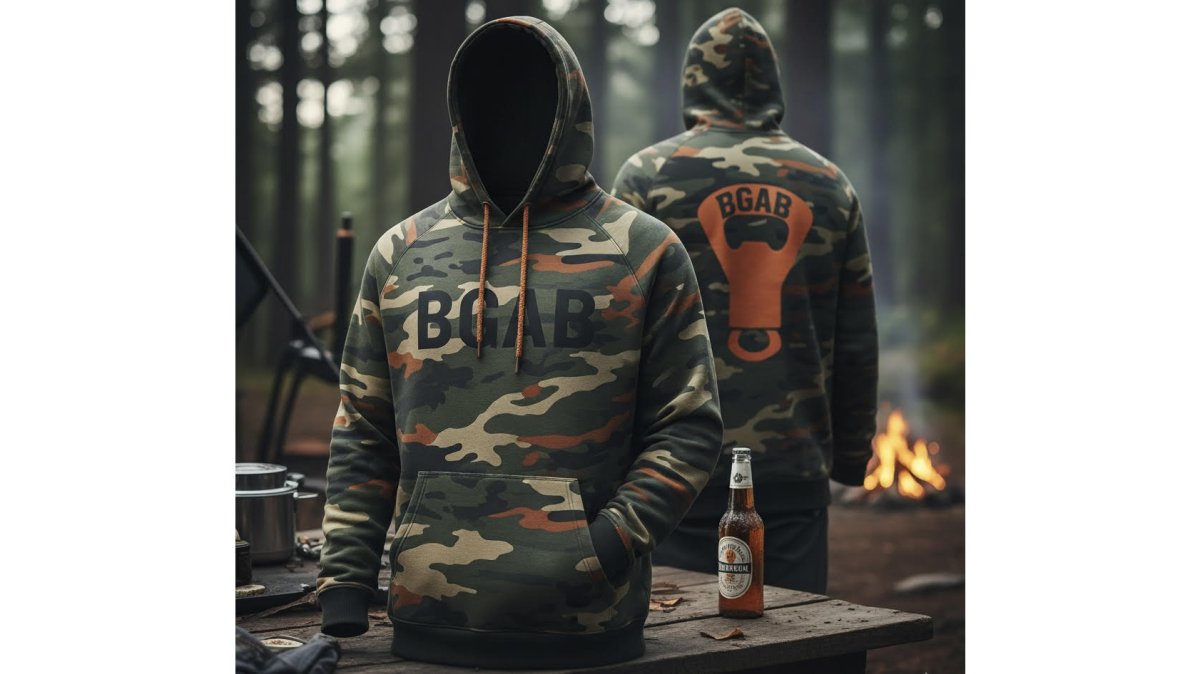
The BGAB Darkwater Hoodie offers a fleece-lined hood, generous fit and 10 oz. weight.
Be honest about the limits of any single garment.
Men's Hiking Pants, Shorts and Fit Guidance
Pants and shorts should allow full range of motion for climbing, kneeling, and stepping over obstacles. Fabric stretch and a relaxed cut prevent the restriction that makes long days miserable. Before you commit, test how a garment feels when you squat, lift a knee, and reach overhead, those movements reveal whether the cut and stretch work for you.
Fit affects both performance and appearance. A shirt that is too tight restricts movement and bunches under layers; one that is too loose catches on branches and feels sloppy. When layering, size your base layer close to the body and give outer layers enough room to fit over it without compressing insulation.
Different body types need different fits. If you are taller, check inseam length and consider pants with a longer rise so they stay put when you bend. Our comfortable camo fit guide for big guys walks through fit considerations by build. If you are between sizes, prioritize movement over a snug look for active pieces, and use the size chart for each specific product rather than assuming one size fits across a brand.
If you are unsure about sizing, measure your chest, waist, and inseam and compare them against the size chart for each product. Fit is personal, when in doubt, choose the size that lets you move freely and layer as needed.
Fabrics, Care and Garment Lifespan
Fabric choice determines how a garment performs, how it feels, and how long it lasts. Compare moisture-wicking gear for men in our broader guide. Most outdoor lifestyle pieces fall into a handful of material families, and each has real trade-offs you should weigh before buying.
Merino wool regulates temperature across a wide range, resists odor naturally, and feels soft against the skin. It is an excellent base layer for cool-to-cold conditions and multi-day trips where washing is limited.
Synthetic performance fabrics (polyester and nylon blends) dry quickly and move moisture efficiently. They are the workhorses of active outdoor wear. The trade-off is odor retention, synthetics can develop smells faster than wool, so look for odor-management finishes and wash them promptly after heavy use.
Fleece (often recycled polyester) is a mid-layer staple: lightweight, breathable, and warm for its weight. It traps heat well but blocks little wind on its own, so it works best under a shell.
Down offers the best warmth-to-weight ratio and compresses small, making it ideal for cold, dry conditions.
Waterproof membranes (such as those used in rain shells) block rain and wind but reduce breathability compared with uncoated fabrics. A waterproof shell is essential for sustained rain; a water-resistant finish handles drizzle and light showers.
Care extends garment life across all these materials. Wash synthetics and fleece in cold water and skip fabric softener, which coats fibers and reduces wicking. Air-dry when possible; high heat can weaken elastic and damage coatings.
The article matches each fabric family to the conditions it handles best.
| Fabric | Best for | Key trade-off |
|---|---|---|
| Merino wool | Cool-to-cold base layers, multi-day trips | Less durable, slower to dry, higher cost |
| Synthetic performance blends | Active wear that dries quickly | Odor retention, pilling over time |
| Fleece | Breathable mid-layer warmth | Blocks little wind on its own |
| Down | Dry, static cold | Loses insulation when wet |
| Synthetic insulation | Wet or unpredictable weather | Less warmth for its weight |
| Waterproof membranes | Sustained rain | Reduces breathability |
Start Building Your Outdoor Wardrobe at Better Grab A Beer
Build your outdoor wardrobe around a base layer, a mid-layer and a wind-resistant outer piece, then add pants and shorts that move with you. Start with the conditions you face most often, choose fabrics that match them, and layer for flexibility. Browse our current selection at BetterGrabABeer.com to find pieces for hunting, hiking and everyday adventures.
Every purchase also supports a cause we care about: 10% of all sales get donated to Wounded Warrior Project.
Frequently Asked Questions
What should men wear for outdoor activities?
Start with a base layer that moves moisture away from the skin, add a mid-layer for insulation, and finish with a windproof or water-resistant outer layer. Choose lightweight, breathable fabrics for active days and heavier insulation for cold mornings. Pieces from Better Grab A Beer such as the BGAB Captain's Shirt at $60.00 or the BGAB Windy Day Jacket Camo at $60.00 can anchor that system. Fit matters as much as fabric, so leave room for movement without excess bulk.
What is the best clothing for hiking in changing weather?
Layering is the most reliable approach because you can add or remove pieces as temperature and wind shift. A moisture-wicking base, a light insulating layer and a packable wind jacket cover most conditions. The BGAB Darkwater LS Shirt at $40.00 offers lightweight moisture wicking and UV protection for warm stretches, while the BGAB Charter QuickDry Hoodie at $45.00 works well as a dry-touch layer on cooler trails.
How should men layer outdoor clothing?
Work from the skin outward. The base layer should be snug and fast-drying, the mid-layer should trap warmth without restricting arm movement, and the outer layer should block wind and light rain. Avoid cotton as a base layer in cold or wet conditions because it holds moisture against the body. Adjust the number of layers based on your activity level, since active hunters and hikers generate more heat than people standing still.
Can hiking clothes be worn for everyday use?
Yes. Many men's hiking shirts, pants and jackets are built for comfort, stretch and durability, which suits daily wear as well as the trail. Their quick-drying fabrics and relaxed fits make them practical for travel, yard work and casual outings. Check care instructions before washing, since performance fabrics can lose some of their finish if dried at high heat.
What should men wear for hunting in cold weather?
Cold-weather hunting calls for a layered system: a moisture-managing base, an insulating mid-layer and a wind-blocking outer shell in a camo pattern suited to your terrain. Keep the outer layer loose enough to allow movement without sweating during the walk in. Better Grab A Beer's camo windbreaker in the BGAB Windy Day Jacket is designed for lightweight wind protection, and heavier pieces like the BGAB Darkwater Hoodie at $60.00 add warmth for stationary hours in the blind or stand.
How should outdoor clothing fit?
Outdoor clothing should fit close enough to trap warmth at the body but loose enough to move freely. Check shoulder and arm mobility, since restrictive sleeves make climbing and drawing a bow harder. Pants should allow a full range of motion at the knee and hip without bunching at the waist. If you are between sizes, consider the layer you plan to wear underneath and size accordingly.
Does Better Grab A Beer donate any of its sales?
Yes. 10% of all sales are donated to Wounded Warrior Project. You can learn more about the brand and its products at BetterGrabABeer.com.