 listicle
Comfortable Hunting Camo for Big Guys: 2026 Fit Guide
Table of Contents
- Why Standard Hunting Camo Fails Bigger Frames
- Quick Comparison: Best Comfortable Hunting Camo for Big Guys
- How to Choose Hunting Camo Patterns for Your Environment
- Best Hunting Bibs for Big Guys: What to Look For
- Layering Tips for Big and Tall Hunters
- Top Picks: Comfortable Hunting Camo for Big Guys
- What Big Guys Should Ignore When Buying Hunting Camo
- Conclusion: Gear That Works for Your Frame
- Frequently Asked Questions
Last Updated: September 13, 2026
Why Standard Hunting Camo Fails Bigger Frames
Most hunting camo is cut for a 5'10", 175-pound frame, then scaled up by adding width instead of reworking the pattern. That's why a 2XL jacket can fit your chest and still bind across the shoulders when you draw. Comfortable hunting camo for big guys starts with pattern design, not size labels.
The problem compounds in the field. A standard cut rides up when you climb into a stand, pulls tight when you kneel, and leaves a gap at the waist when you bend. For hunters in extended sizing, the fix isn't a bigger size. It's an articulated fit, a gusseted crotch, and an adjustable waist built into the garment from the start.
This guide from Better Grab A Beer breaks down what actually matters: pattern, layering, fabric weight, and the specific features that keep a larger frame mobile through a full day of hunting.
Quick Comparison: Best Comfortable Hunting Camo for Big Guys
| Piece | Price | Best For | Key Fit Feature |
|---|---|---|---|
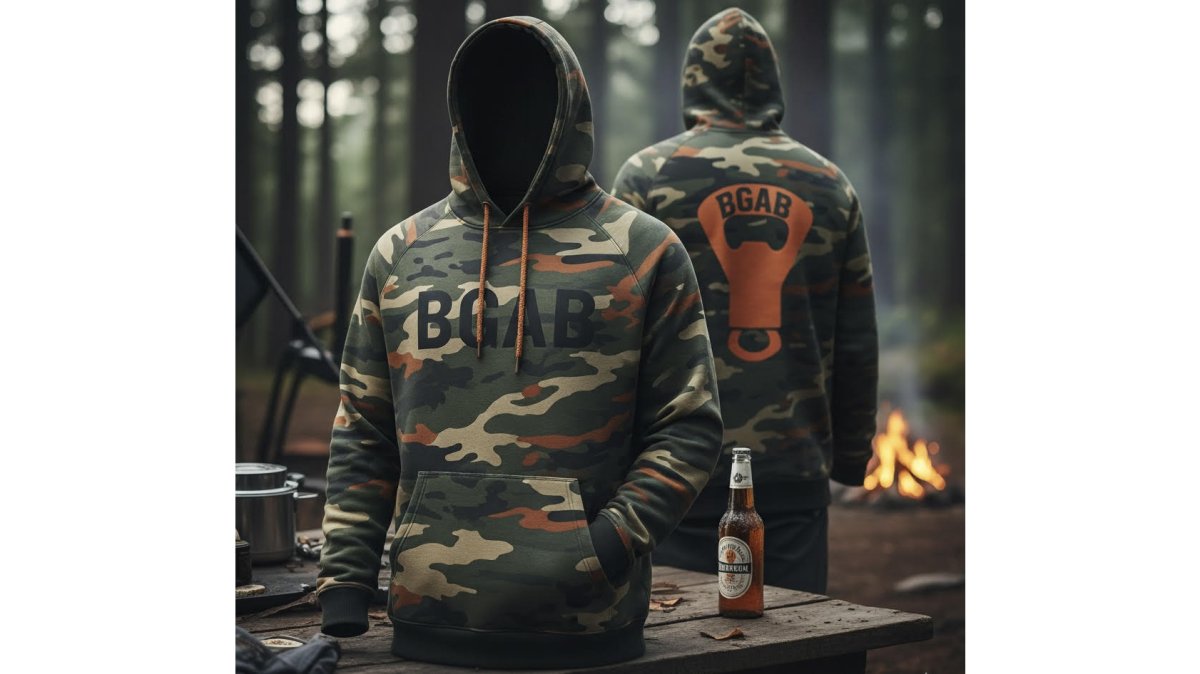
| BGAB Hunt Predator Camo Hoodie | $75.00 | Cold-weather layering | Generous fit, fleece-lined hood |
| BGAB Hunt Predator Camo Long Sleeve | $45.00 | Early season base layer | Loose cut, full range of motion |
| BGAB Predator Hunt Hoodie | $60.00 | Mid-weight outer layer | 10 oz. cotton-poly blend |
| BGAB Hunt Predator Camo Rainbreaker | $120.00 | Wet, windy conditions | Lightweight shell over layers |
| BGAB Predator Hunt Tee | $30.00 | Warm-weather scouting | 100% cotton, rib knit collar |
For a bigger frame, the hoodie and rainbreaker do the heavy lifting. The long sleeve and tee handle warmer days.

How to Choose Hunting Camo Patterns for Your Environment
Match the pattern to your terrain, not the trend on the shelf. A pattern that works in a pine stand looks like a dark blob in open sage. Learning how to choose hunting camo patterns comes down to three variables: dominant vegetation, season, and how much you move.
Break it down by environment:
- Timber and hardwoods: vertical breakup patterns with bark and branch shapes
- Open fields and CRP: lighter, tan-dominant patterns with grass texture
- Mountain and high country: gray and brown mixes that read at distance
- Late season snow: white-dominant or high-contrast patterns
The Predator camo in the Better Grab A Beer hunt line leans toward timber and mixed cover, which covers most whitetail setups. If you hunt wide-open country, add a lighter outer layer to break up your silhouette.
quality and performance standards for outdoor apparel from ASTM International
Best Hunting Bibs for Big Guys: What to Look For
The best hunting bibs for big guys solve one problem above all: keeping your core covered when you bend, sit, and climb. Bibs beat pants for larger frames because suspenders hold the waist where it belongs instead of relying on a belt that digs in.
But most bib advice stops at the feature list. The real question is how the garment behaves under load. Here's what actually separates a bib that works on a bigger frame from one that just fits in the store.
Start with the rise, not the waist size. On a larger frame, a low-rise bib pulls down when you squat and exposes your lower back on the stand. Look for a bib with a rise that sits at or above your natural waistline, so the suspenders carry the weight instead of your hips. If the front panel gaps when you bend forward, the rise is too short, sizing up won't fix it.
Check the suspender attachment points. Front and back adjustment is table stakes, but the anchor position matters more. Suspenders that attach wide across the chest distribute load better than narrow, center-mounted straps that dig into the trapezius after an hour in a tree. Elastic segments in the rear straps let the bib flex when you twist to draw.
Look at the crotch construction. A gusseted crotch adds a diamond or triangular panel of fabric so the seam doesn't run straight through the stress point. On a heavier frame, that panel is the difference between stepping over a log and hearing a seam pop. Pair it with articulated knees, pre-bent fabric panels that follow the leg instead of fighting it when you kneel or climb.
Inseam and hem. A 34-inch inseam isn't the ceiling. Many big-and-tall lines now run to 36 inches and beyond, and some offer unhemmed lengths you can tailor. A hem that rides above your boot top lets cold air in; a hem that drags collects mud and burrs.
Venting and side zips. Full-length side zips let you dump heat on the walk in without stripping layers. On a bigger frame, that matters more because you generate heat faster on the climb and cool down slower once you're stationary.
Fabric weight trade-off. Heavier fleece-lined bibs are warmer but stiffer, and stiff fabric restricts the hip hinge you need for a seated draw. Lighter softshell bibs move better but need a base layer underneath in cold weather. There's no free lunch here, pick based on whether you're sitting long or walking far.
Skip bibs with a fixed waist and no stretch. They'll fit in the store and fight you in the field. If you run hot, a pant with a high rise and a good belt is a reasonable alternative, but bibs win for cold-weather sits.
sizing and fit guidance for outdoor apparel from ASTM International
Layering Tips for Big and Tall Hunters
Layering tips for big and tall hunters come down to one rule: each layer has to be cut to work over the one beneath it. A tight base layer under a baggy shell traps cold air and kills your range of motion. Order layers by function, then check the fit at each step.
Most layering guides stop there. The problem is that on a larger frame, the standard three-layer formula creates a bulk stack that binds at the shoulders and hips, the two places you need the most freedom. Here's how to build a system that doesn't fight you.
Size each layer for the stack above it, not your bare body. This is the single biggest mistake bigger hunters make. A shell that fits snug over a tee will lock up your shoulders once you add fleece underneath. When you try on a shell, wear your thickest mid-layer under it. If you can't raise your arms overhead without the hem riding up past your belt, it's too small regardless of the tag.
Keep the base layer close but not compressive. A moisture-wicking base layer should sit against the skin without bunching at the shoulders or armpits. On a bigger frame, bunching creates pressure points that turn into hot spots after a few hours. Look for base layers with flatlock seams and a bit of stretch, merino wool and polyester blends both work, and the choice comes down to whether you run hot or cold.
Choose mid-layers with stretch panels. Fleece and wool mid-layers are the thermal engine of the system, but a rigid fleece jacket restricts the draw. Mid-layers with stretch side panels or a grid-fleece construction move with you while still trapping heat. Grid fleece in particular breathes better on the walk in, which matters because bigger hunters tend to overheat on the climb.
Treat the shell as a system component, not a jacket. The outer shell is your wind and waterproof membrane, and it should be sized to fit over everything else. Pit zips and full side zips let you vent without stripping the whole stack. A shell with a two-way front zipper lets you open the bottom for hip hinge freedom while keeping your chest covered.
Add or remove insulation last. A puffy or synthetic insulation layer goes over the mid-layer and under the shell when temperatures drop. On a bigger frame, a vest often beats a full jacket here, it keeps your core warm without adding bulk to your arms, which is where restriction hurts most during a draw.
Test the full stack before opening day. Put on every layer together, then run through the motions you'll actually use: climbing into a stand, sitting for an hour, drawing a bow, shouldering a rifle. If any layer pulls, binds, or gaps during that test, swap it out now rather than discovering the problem at first light.
Top Picks: Comfortable Hunting Camo for Big Guys

The best comfortable hunting camo for big guys pairs a generous cut with fabric that moves. Here's how the Better Grab A Beer hunt lineup stacks up for larger frames.
BGAB Hunt Predator Camo Hoodie ($75.00) is the anchor piece. Warm, ready for the hunt, and cut with room through the chest and shoulders. Wear it as a mid-layer under a shell or solo on mild days. The camo reads well in mixed timber.
BGAB Hunt Predator Camo Rainbreaker ($120.00) is the piece bigger hunters overlook. Lightweight, packable, and built to sit over a hoodie without binding. It keeps you dry in a pop-up shower and blocks wind on an exposed ridge.
BGAB Hunt Predator Camo Long Sleeve ($45.00) handles early season. Loose through the torso, so it works as a base layer or a standalone shirt when it's warm.
BGAB Predator Hunt Hoodie ($60.00) is the mid-weight option. A 10 oz. cotton-poly blend with a generous fit and a fleece-lined hood. Good for scouting, camp, and cool mornings.
BGAB Predator Hunt Tee ($30.00) rounds out the kit for warm-weather work. 100% cotton with camo detailing and a rib knit collar.

What Big Guys Should Ignore When Buying Hunting Camo
Ignore the size chart as your only guide. Size chart accuracy varies wildly between brands, and a 2XL from one maker fits like a 3XL from another. Measure your chest, waist, and inseam, then check the brand's specific fitment notes.
Other things to skip:
- "Slim fit" marketing: slim cuts look great on a hanger and restrict movement on a stand
- Single-layer claims: no one garment handles every temperature
- Scent control as a substitute for fit: scent control matters, but a jacket that binds will ruin your sit faster than any deer's nose
- Trendy patterns over proven ones: durability and quiet fabric beat a new print
Conclusion: Gear That Works for Your Frame
Finding comfortable hunting camo for big guys shouldn't mean settling for a boxy fit or a jacket that fights you all season. Build around an articulated cut, layer for your climate, and size your shell for the stack underneath it.
Better Grab A Beer builds hunt gear for real frames, from the Predator Camo Hoodie to the Rainbreaker shell, all cut with room to move. Every order supports the outdoors community too: 10% of all sales get donated to Wounded Warrior Project. Head to BetterGrabABeer.com and gear up for your next season.

Frequently Asked Questions
What are some good big and tall hunting clothes for men?
Look for brands that offer extended sizing with articulated fit and gusseted construction. The BGAB Hunt Predator Camo Hoodie at $75 uses a generous fit with fleece-lined hood and ribbed cuffs that work well for bigger frames. Pair it with the BGAB Hunt Predator Camo Rainbreaker at $120 for a waterproof outer shell. Prioritize adjustable waist features and inseam lengths that match your measurements rather than settling for standard sizes.
How should hunting camo fit for maximum comfort and mobility?
Hunting camo should allow full range of motion without excess fabric bunching. Check for articulated elbows and knees, a gusseted crotch, and an adjustable waist. The fit should be close enough to avoid snagging but loose enough to layer a base layer and mid-layer underneath. Test by squatting, raising your arms overhead, and drawing back if you bow hunt. If any motion feels restricted, size up or choose a different cut.
What features should big guys look for in hunting bibs?
Focus on adjustable waist straps, reinforced knees, and a gusseted crotch for mobility. Bib overalls with side zippers make bathroom breaks easier and allow ventilation during warm walks to your stand. Look for moisture-wicking linings and quiet fabric that won't spook game. Inseam length matters too, since standard bibs often run short on taller frames. Check size chart accuracy before ordering and read reviews from other big and tall hunters.
How do I layer hunting clothes effectively if I am a big guy?
Start with a moisture-wicking base layer that fits snugly without binding. Add a mid-layer like a fleece or the BGAB Predator Hunt Hoodie at $60 for insulation. Top with a waterproof outer shell such as the BGAB Hunt Predator Camo Rainbreaker at $120. Each layer should be independently comfortable and allow movement. Avoid cotton next to skin because it holds sweat and chills you once you stop moving. Adjust layers as your activity level changes throughout the day.
Are there specific camo patterns that work better for larger hunters?
Larger hunters benefit from patterns with medium-to-large shapes rather than tiny micro patterns, which can create visual noise that makes your outline more noticeable. Choose a pattern that matches your environment: hardwood or timber patterns for forest, open-country patterns for fields, and darker patterns for low-light conditions. The BGAB Predator Camo line uses a versatile pattern that works across multiple settings and is available in extended sizes for big and tall hunters.
The right camo system keeps you mobile, warm, and still when it counts. Better Grab A Beer offers hunt apparel with a generous fit, moisture-wicking and weather-ready layers, and a rain shell built to sit over them. Get started with Better Grab A Beer and build a camo kit that fits your frame from opening day to the last sit.